
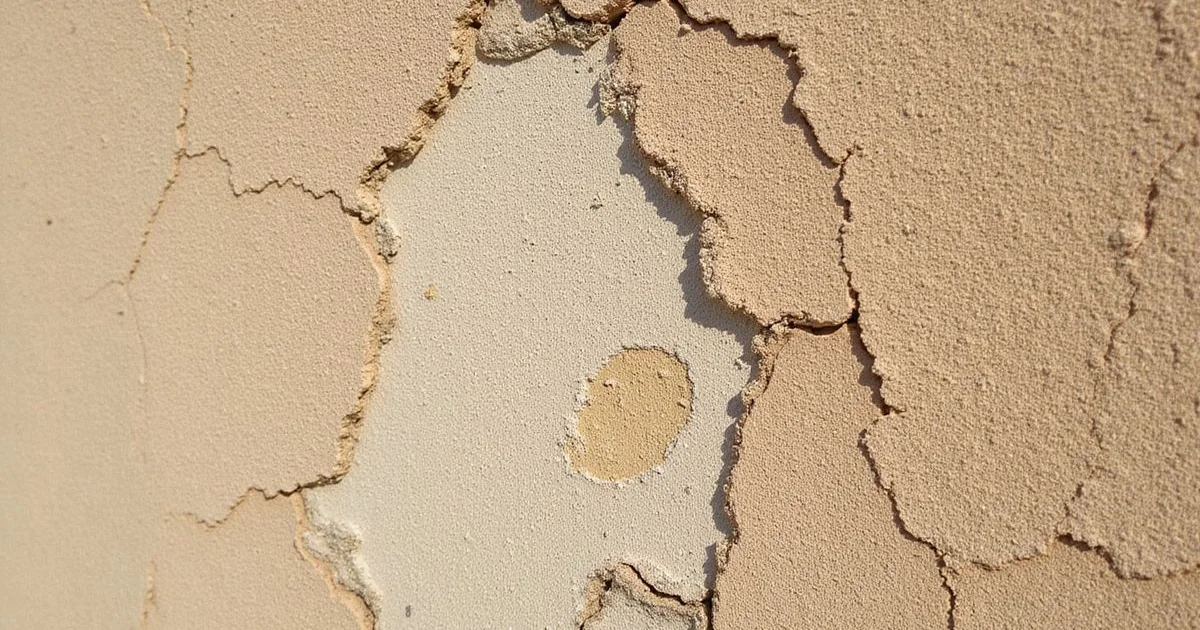
Living in Phoenix means your home’s exterior paint faces a punishment that homeowners in milder climates never experience. Between relentless UV radiation, triple-digit summer temperatures, and the sudden moisture of monsoon storms, paint on Valley homes deteriorates faster than almost anywhere else in the country. From what we see in neighborhoods like Ahwatukee and Chandler, catching these warning signs early can save you thousands of dollars in stucco repairs.
Here are the seven clearest signs that your Phoenix home is overdue for a fresh coat of exterior painting.
1. Chalking and Fading
Run your hand along your home’s exterior wall. If a white, powdery residue comes off on your fingers, your paint is chalking. This is the most common paint failure we encounter in Phoenix, caused when the acrylic binder breaks down under the intense UV Index, which frequently hits 11 (Extreme) during summer. South- and west-facing walls are especially vulnerable because they absorb the most direct sunlight throughout the day.
Mild chalking is normal as paint ages, but heavy chalking means the paint film has deteriorated significantly. At this stage, the coating no longer protects your stucco from moisture, making a repaint necessary. You will also notice the color looking washed out, often losing 50% or more of its original vibrancy.
The “Thumb Test”
Professionals use the ASTM D4214 standard to rate chalking, but you can do a simple version yourself. Press your thumb firmly against the wall and twist it 90 degrees. If the skin on your thumb is completely covered in powder, your paint’s protective resin is gone.
2. Cracking and Flaking Paint
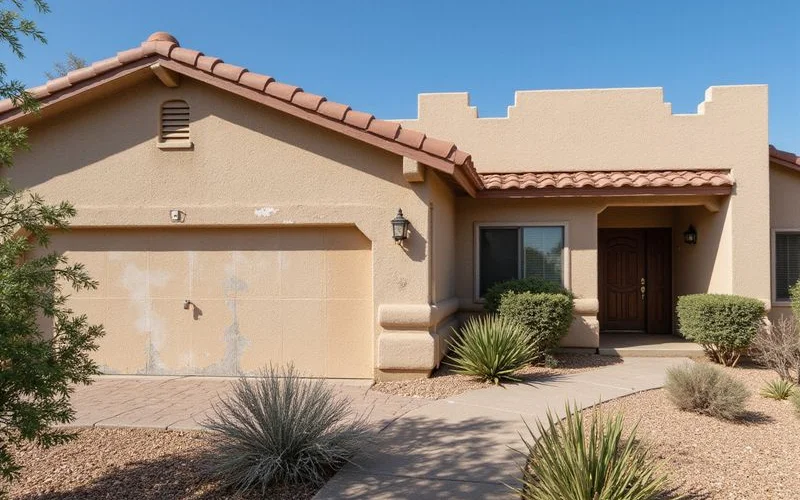
Cracks in your exterior paint are more than cosmetic problems. In Phoenix, the daily temperature cycle can swing 30 degrees or more, causing building materials to expand and contract repeatedly. This thermal shock causes paint to lose elasticity and crack. Those cracks then allow moisture from monsoon rains to penetrate behind the paint film, which leads to flaking and peeling.
Identifying Crack Severity
There are two types of cracking to watch for:
- Hairline Cracks: These are less than 1/16 inch wide (about the thickness of a credit card). A high-quality 100% acrylic paint can often bridge these if caught early.
- Structural Cracks: Anything wider than 1/8 inch requires more than just paint. Our team typically uses a textured elastomeric patch to fill these voids before priming, ensuring the repair blends seamlessly with the surrounding stucco.
3. Bubbling and Blistering
Bubbles or blisters in your exterior paint are a clear sign of moisture problems. In Phoenix, this often occurs when monsoon rain gets behind the paint through cracks or failed caulking. The trapped moisture then heats up during the day—surface temperatures on dark walls can exceed 160°F—creating pressure that pushes the paint away from the surface.
Blistering can also happen when paint was applied in direct sunlight during extreme heat, causing the outer layer to trap solvents. Regardless of the cause, blistered paint needs to be removed and the underlying issue addressed before repainting. simply painting over blisters will not solve the problem and will likely make it worse.
4. Stucco Cracks Without Paint Coverage
Most Phoenix homes feature stucco exteriors, and stucco naturally develops hairline cracks over time due to settling and thermal movement. A good exterior paint job fills and bridges these small cracks, creating a protective seal. When paint wears thin or fails, those stucco cracks become exposed pathways for water intrusion.
The “Efflorescence” Warning
Walk around your home and look for white, salty deposits (efflorescence) near cracks. This mineral buildup indicates that water is already moving through your stucco walls. If you see bare stucco through the paint or notice cracks that are no longer covered, it is time for a professional assessment. Our stucco repair service addresses these issues before repainting, ensuring a durable result. Left untreated, water infiltration through exposed stucco cracks can cause serious structural damage.
5. Caulking Failure Around Windows and Doors
While caulking is not paint itself, the two work together as a system to protect your home’s envelope. Check the caulk lines around your windows, doors, and where different building materials meet. If the caulk is cracked, pulling away from surfaces, or has hardened and lost its flexibility, your home is vulnerable to water and pest intrusion.
Choosing the Right Sealant
In Phoenix, standard latex caulk often dries out and fails within three years. We recommend using a high-performance polyurethane sealant for stucco repairs. These products offer superior flexibility and can withstand the desert’s expansion and contraction cycles much better than cheaper alternatives. When you repaint, a professional crew will remove old caulking and apply fresh, high-quality sealant before painting to restore the complete protective system.
6. Mold, Mildew, or Dark Staining
Phoenix’s dry climate makes mold less common than in humid states, but it absolutely still occurs. You will typically find it on north-facing walls, in shaded areas behind vegetation, or near drip irrigation systems that splash onto walls. Dark staining on your exterior walls may indicate mold or mildew growth, which means moisture is present where it should not be.
Safe Removal Methods
If you spot dark patches, do not simply paint over them. We suggest cleaning the area with a solution of one part bleach to three parts water to kill the spores. Alternatively, using a specialized cleaner like Jomax can remove the stains without damaging the stucco texture. Once the surface is clean and dry, it can be primed and painted with mildew-resistant exterior paint.
7. Your Last Paint Job Was Five or More Years Ago
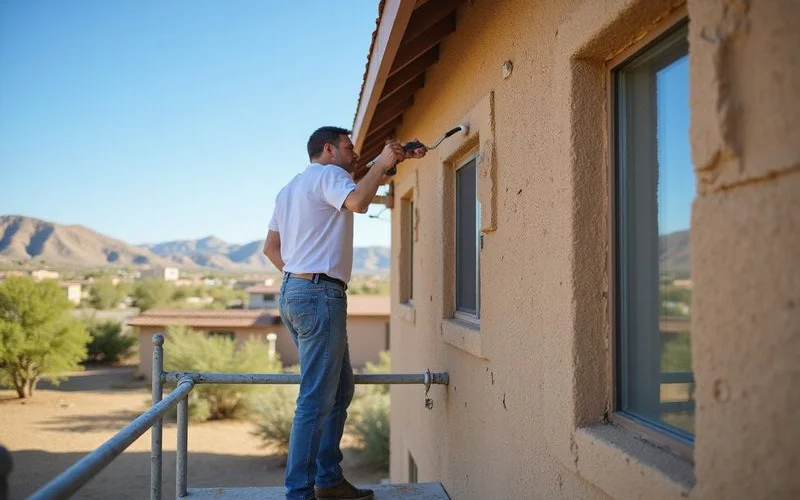
In many parts of the country, exterior paint can last seven to ten years. Phoenix is not one of those places. The combination of extreme UV exposure, intense heat, monsoon moisture, and temperature cycling means exterior paint in the Valley typically lasts four to six years before it needs attention. HOAs in communities like Gilbert and Chandler are strict about this, often issuing violation notices as soon as they spot fading or oxidation. If you live in an HOA community, our HOA painting service includes color approval coordination to avoid costly re-dos.
The Cost of Waiting
A proactive approach to repainting saves money in the long run. Repainting before significant failure occurs means less prep work and lower labor costs. For a standard 2,000-square-foot home in 2026, a full professional repaint typically ranges between $5,400 and $8,500 depending on the condition of the stucco. Letting the paint fail completely can increase that cost significantly due to the extensive repairs required.
How Arizona’s Climate Accelerates Paint Wear
Understanding why paint fails faster in Phoenix helps you make better decisions about timing and products. Here are the primary environmental stressors your home faces every day:
UV Radiation
Phoenix receives over 300 days of sunshine per year, and the UV index regularly reaches extreme levels during summer. Ultraviolet radiation breaks down the chemical bonds in paint, causing color fading, chalking, and eventual film failure. This is why UV-resistant paints and lighter color choices—which can reflect up to 80% of solar heat—last noticeably longer on Phoenix homes.
Thermal Cycling
Summer surface temperatures on sun-exposed walls can exceed 160 degrees Fahrenheit during the day and drop to 85 degrees at night. This constant expansion and contraction stresses paint films and the substrates beneath them, leading to cracking over time.
Monsoon Moisture
The monsoon season from June through September brings sudden, intense rainstorms that can dump an inch of rain in under an hour. When paint has any cracks or weak points, this driving rain forces moisture behind the coating where it causes blistering, peeling, and potential structural damage.
What to Do When You Spot These Signs
If you have identified one or more of these warning signs on your home, the best next step is a professional inspection. A qualified exterior painting contractor can assess the extent of the damage, identify any underlying issues that need correction, and provide an accurate estimate for restoring your home’s protection and curb appeal.
At John Claude Painting, we see these issues on Phoenix homes every day. Our team understands the unique demands that the Arizona climate places on exterior coatings, and we use products and techniques specifically selected for desert conditions. We offer free exterior inspections and detailed estimates so you can make an informed decision about protecting your biggest investment.
Do not wait until minor paint wear becomes a major repair project. The sooner you address failing exterior paint, the less it will cost and the better your results will be.