
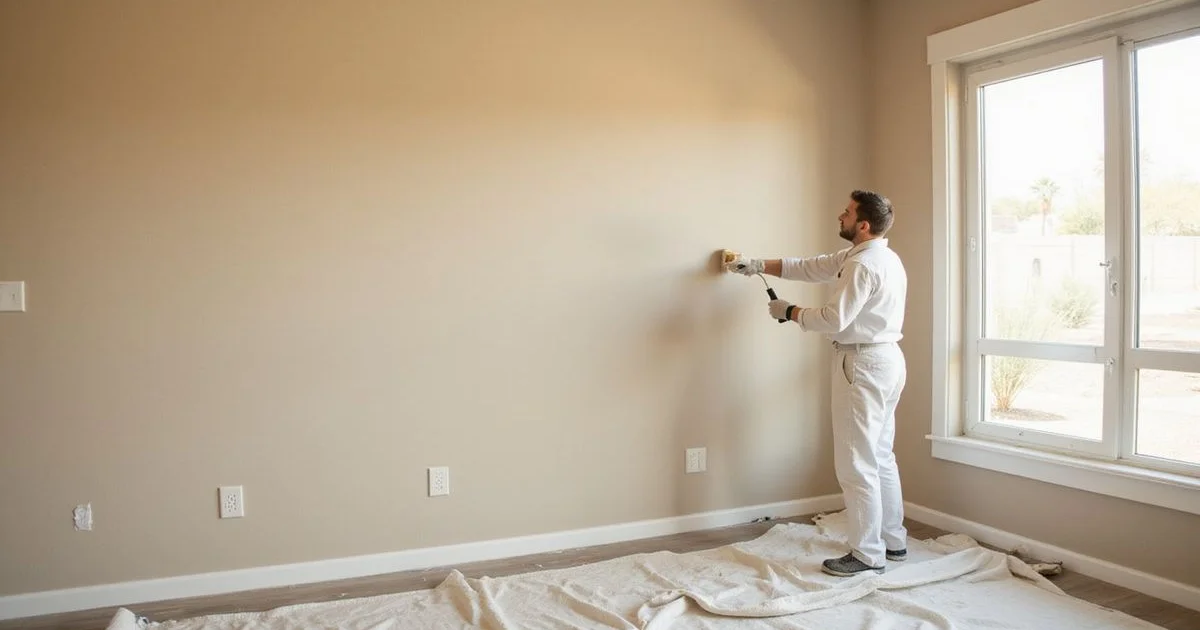
If you are planning an interior painting project in Phoenix, you have likely noticed that prices have shifted significantly over the last two years.
We understand that budgeting for home improvements in 2026 feels different than it did even a few years ago.
Local labor shortages and material price increases have changed the landscape.
This guide provides the specific numbers, local insights, and budgeting strategies you need to plan your project in the Phoenix metro area right now.
We will break down the real costs, explain why quotes vary so much, and help you determine where your money is best spent.
Average Interior Painting Costs in Phoenix (2026 Update)
We track local pricing trends closely to keep our estimates accurate.
In 2026, professional interior painting in the Phoenix metro area typically costs $5.00 per square foot of wall space.
This is a slight increase from previous years, driven largely by the rising cost of skilled labor in the East Valley.
For a standard 2,000-square-foot home in Chandler or Gilbert, this usually translates to a total project cost between $5,000 and $9,000.
Pricing depends heavily on whether you are painting just the walls or including ceilings and trim.
Room-by-Room Pricing Breakdown
We have compiled a table of current market rates to help you visualize the cost for specific areas of your home.
| Room Type | Average Size | Estimated Cost Range |
|---|---|---|
| Small Bedroom / Office | 10’ x 12’ | $450 - $850 |
| Master Suite | 14’ x 16’ | $700 - $1,200 |
| Bathroom | 6’ x 8’ | $300 - $650 |
| Kitchen (Walls Only) | Varies | $500 - $950 |
| Living Room (High Ceilings) | 15’ x 20’ | $900 - $1,800 |
| Hallway / Entry | Linear | $350 - $700 |
| Whole House (1,500 sq ft) | Standard | $3,500 - $6,500 |
| Whole House (2,500 sq ft) | Standard | $6,000 - $10,500 |
These figures assume a standard two-coat application using high-quality acrylic latex paint.
Large repairs or significant color changes will naturally move these numbers toward the higher end of the spectrum.
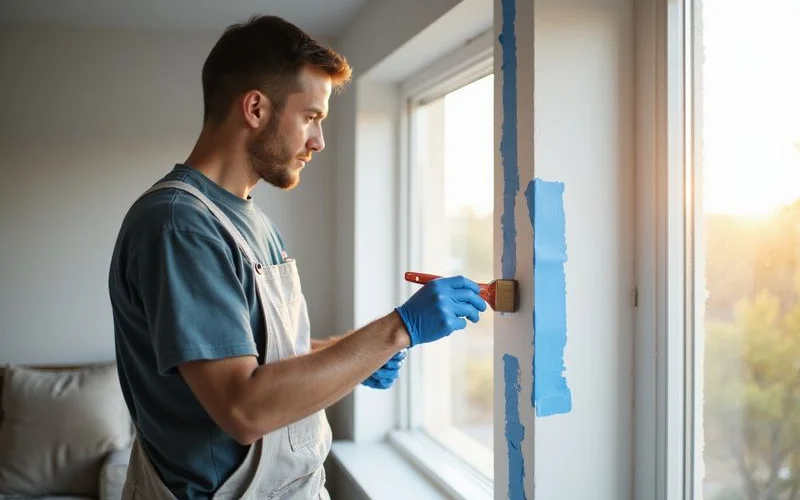
Factors That Affect Interior Painting Cost
Every home in the Valley has unique characteristics that influence the final quote.
We look at four specific variables when calculating a bid for a home in Phoenix.
Square Footage and Ceiling Height
Floor square footage does not always tell the whole story.
Many homes in Ahwatukee and Gilbert built between 1995 and 2005 feature vaulted ceilings that soar to 12 or 15 feet.
Painters must use scaffolding or tall ladders to reach these areas safely.
This additional equipment and risk factor can increase the labor cost for that specific room by 25 to 40 percent.
Labor makes up roughly 80 to 85 percent of the total project price in 2026, so anything that slows down the process will impact the budget.
Wall Condition and Texture Matching
Phoenix homes predominantly feature textured walls, such as “Orange Peel,” “Knockdown,” or the smoother “Santa Fe” style.
We often find that settling cracks are common in these homes due to the shifting desert soil.
Repairing a crack is simple, but matching the existing texture so the repair is invisible requires a high level of skill. If you have significant wall damage, you may want to consider drywall repair as a separate line item before painting begins.
If your walls require extensive patching or re-texturing, you should budget an additional $1.00 to $2.00 per square foot for prep work.
Paint Quality and Brand
The material you choose plays a massive role in the longevity of the finish.
We strongly recommend using premium lines from trusted manufacturers like Dunn-Edwards (a Southwest staple) or Sherwin-Williams.
Specifically, products like Dunn-Edwards Everest or Sherwin-Williams Emerald offer superior durability and washability.
A gallon of contractor-grade “production” paint might cost $30, whereas these premium options sit between $70 and $95 per gallon in 2026.
Using higher-quality paint often means fewer coats are needed, which can actually balance out the labor costs.
Trim, Doors, and Baseboards
Painting the “woodwork” is a separate labor category from the walls.
Baseboards in modern Phoenix renovations are often 4 to 6 inches tall, requiring more material and precise cutting-in lines.
Expect to pay $1.50 to $3.50 per linear foot for baseboards and door casings.
Doors typically cost $90 to $175 per door depending on whether they are flat panels or have intricate raised detailing.
Phoenix-Specific Considerations
Painting in the low desert presents challenges that do not exist in other parts of the country.
We account for these environmental factors to ensure the finish dries properly and lasts for years.
The “Flash Drying” Phenomenon
The extremely low humidity in Phoenix causes paint to dry much faster than manufacturers intend.
This issue, known as “flash drying,” can lead to lap marks or uneven sheens if the painter is not experienced with local conditions.
Our teams use specific additives (extenders) during the hotter months to keep the paint “open” or wet longer, ensuring a smooth, flawless finish.
Summer Humidity and Monsoons
While it is usually dry, the monsoon season from July to September brings spikes in humidity.
Evaporative coolers (swamp coolers) can make interior painting risky during these months because the moisture prevents the paint from curing hard.
We recommend scheduling interior work when you can run a standard A/C unit to control the indoor climate.
Sun Exposure and Fading
The intensity of the Arizona sun can fade interior walls near south-facing windows in as little as two years.
We suggest using paints with high UV resistance and 100% acrylic binders for rooms with large sliding glass doors or picture windows.
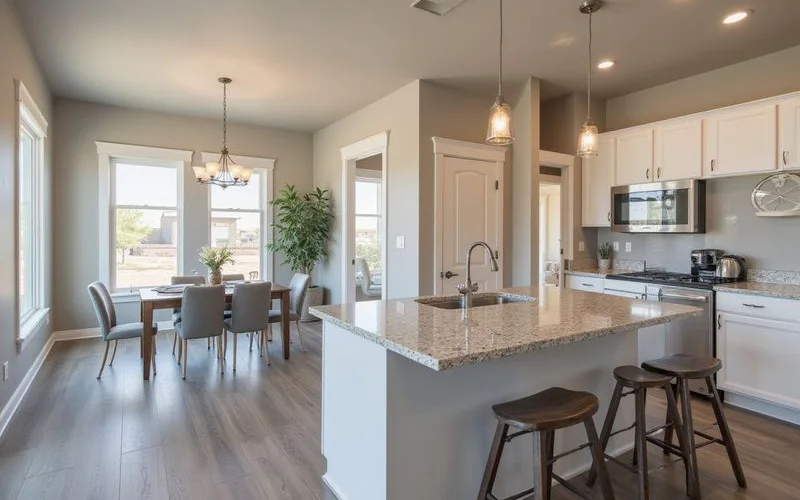
Tips to Get the Best Value on Your Painting Project
Value is about getting the longest-lasting result for a fair price.
We have identified three strategic ways homeowners can maximize their budget.
1. Bundle Your Rooms
Painters have “mobilization costs” associated with setting up tools, masking floors, and buying supplies.
Painting your main living areas and hallways in one project is roughly 20% cheaper per square foot than breaking them into separate jobs over six months.
Volume allows contractors to work efficiently without constant setup and teardown.
2. Choose the Right Sheen
We see many homeowners default to flat paint because it hides wall imperfections.
However, flat paint is difficult to clean and scuffs easily, which is not ideal for active families in Chandler or Gilbert.
A matte or low-sheen eggshell finish offers the best of both worlds: it hides texture flaws while providing a wipeable surface that extends the repaint cycle.
3. Verify the Scope of Work
Low bids often exclude critical steps.
We advise you to check if the quote includes moving heavy furniture, removing switch plates (rather than taping over them), and specific brand names for the paint.
A bid that specifies “two coats of Sherwin-Williams SuperPaint” is worth more than a bid that just says “paint walls.”
DIY vs. Professional Painting
Painting a small guest room is a manageable weekend project for many homeowners.
We encourage DIY for small spaces, but painting an entire home requires a different level of logistics.
A professional crew can complete a 2,500-square-foot home in 3 to 5 days, a task that often takes a homeowner a month of weekends to finish.
Professionals also have the spray equipment necessary to achieve a factory-smooth finish on doors and trim, which is nearly impossible to replicate with a brush and roller. If your kitchen cabinets need updating too, a cabinet painting project can be bundled with your interior paint job for better value.
If you are considering an interior painting project for your Phoenix home, accurate information is your best tool.
We at John Claude Painting AZ provide detailed, transparent consultations that break down exactly where every dollar goes.
Getting a clear picture of the costs helps you make the right decision for your home’s long-term value.
Frequently Asked Questions
How long does interior painting take in Phoenix?
Most average-sized homes (around 2,000 sq ft) take a professional crew 3 to 5 days to complete. Occupied homes may take slightly longer due to the care required to move and protect furniture.
What is the best paint for Phoenix homes?
100% acrylic latex paints are best for Phoenix interiors. Brands like Dunn-Edwards and Sherwin-Williams have specific formulations that perform well in our dry climate.
Does the estimate include paint materials?
Professional estimates typically include both labor and materials. Always verify this in writing, as some low-cost providers may ask you to purchase the paint separately.
Should I paint my ceiling white or the same color as the walls?
In Phoenix, where open floor plans are common, painting the ceiling a flat white is standard to reflect light and make the room feel larger. However, using the same color at 50% strength is a modern trend that adds subtle depth.